Venezuela: The Caribbean Crisis and the Return of the Monroe Doctrine
The escalating tensions between the US and Venezuela mark a significant return to military posturing in Latin America, driven by diplomatic confrontation and strategic military deployment. Will this show of force lead to direct military intervention, or will it remain a tool for coercive diplomacy and political pressure?
VENEZUELA
Ermek Esenkanov
11/29/20254 min read
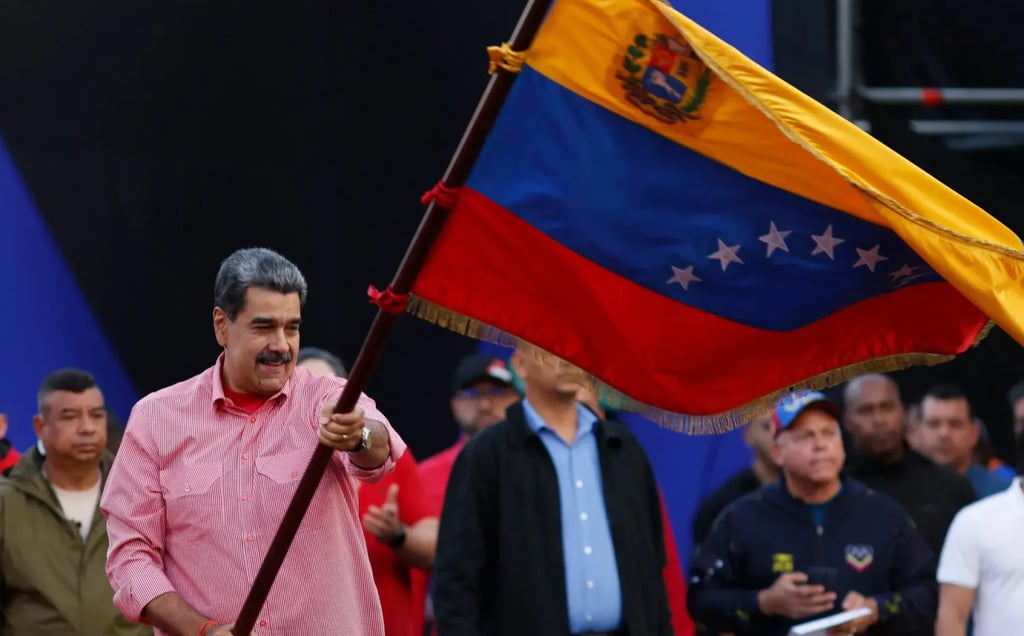
The relationship between Venezuela and the US has recently escalated into a new phase. For the first time since the invasion of Panama, the US is sending a significant military presence to the shores of Latin America with the deployment of the USS Gerald R. Ford carrier strike group, along with the “Iwo Jima” Amphibious Ready Group, and destroyers Gravely and Dunham. Additionally, the US is utilizing B-52 and B-1 strategic bombers, MQ-9 Unmanned Aerial Systems, and F-35 fighter jets, which have been moved from the US mainland to reactivated island air bases. Over 10,000 American troops are currently deployed to various locations across Latin America. American reconnaissance aircraft are constantly flying over the coast of Venezuela, while US Special Operations Forces have developed a method of covert operations utilizing US Navy surface vessels like the MV Ocean Trader, which has been outfitted to prepare for covert operations in Venezuela. Since September 2, 2025, the US has seized and destroyed over 20 vessels that have been used to transport illicit drugs, and numerous individuals have been killed. While publicly, this is a war on cartels, the US is privately putting pressure on President Nicolás Maduro’s regime in Venezuela.
Washington’s designation of multiple Latin American organizations on its Foreign Terrorist Organization list created an inevitable escalation after the Venezuelan groups Cartel de los Soles and Tren de Aragua were added to that list. The amount of power granted to the President through the process of FTO designation cannot be overstated. For example, an entire class of objects once considered to be intercepted and detained by law enforcement officials is now allowed to be sunk. Furthermore, the geopolitical ramifications are staggering. By naming Latin American groups as an FTO, the US has developed a hybrid of legal frameworks that allow for action against a government it believes has aided terrorists.
The US government has said that these organizations coordinate with President Maduro, but there is a debate over whether this is true. US intelligence assessments have been much more cautious than the Trump administration’s claims. In any case, this does not really matter for political purposes. Once Venezuela has been labelled as “terrorist-linked,” it automatically puts Venezuela in line with the revived Monroe Doctrine, plus the Trump administration’s efforts against the “troika of tyranny” (Cuba, Venezuela, Nicaragua) and a stronger competition over China, Russia, and Iran. As a result, the Caribbean is no longer considered to be a foreign area. It now falls under America's strategic umbrella.
American military officials are growing uneasy as military preparations for a potential strike or special operation gain political momentum. A key concern is that basic operational control authority is being placed outside of normal military command structures, bypassing the traditional chain of command in favor of other militarized government units. This shifting authority, particularly toward special operations units, is reportedly a factor in the resignation of U.S. Southern Command (SOUTHCOM) Commander ADM Alvin Holsey, according to foreign press reports.
Venezuela has shifted into a heightened state of military alert, going to maximum readiness with an array of military assets mobilized, in addition to a call for a change to the leadership of the military, and a call for support from Russia, China, and Iran (the latter two of which are cited as potential aggressors in the region). Russia denies having received an official request for assistance. Furthermore, many analysts do not see how Russia could mount any significant military measures, given Russia’s ongoing commitments to Ukraine and the continued decline of the military infrastructure of Venezuela.
Venezuela’s stability relies not on its popularity but rather on what some analysts refer to as a “fusion of function,” in which the ruling elite are effectively stakeholders in the country's revenue flows from state-owned enterprises (and illegal activities). If a new government were to espouse pro-American policies, then the ruling elite would face the twofold threat of losing control over state resources and being extradited to the United States. This significantly reduces the incentive for any of them to consider defection. Washington is currently exploring three potential scenarios for the continued existence of the Maduro regime. The first option is for the regime to suffer a psychological collapse, the second is limited military action targeting air defense systems and command and control nodes, and the third is the execution of a long-range, high-risk special operations mission to capture President Maduro. Implementing the latter scenario could lead to either a Libya-style collapse of the regime or a severe international humiliation for the United States if it were to fail.
Contradictions are growing between economic issues. Despite increasing tensions, Trump has extended Chevron’s permission to operate in Venezuela. While US warships are approaching the Caribbean Sea, the American energy company is steadily developing projects in Venezuela. This contradictory situation reflects the dual strategy of the United States, which is composed of ideological opposition to socialist governments combined with competitive bargaining with China over access to natural resources. Accordingly, Venezuela can serve as both a target and a bargaining chip.
At present, neither Washington nor Caracas has provided a clear answer to the question of how the Trump administration will act towards Venezuela. Will it conduct military strikes, launch limited campaigns, engage in coercive diplomacy, or is all of this simply a massive bluff? The American fleet off the coast of Venezuela represents a triple force, including a source of pressure, a signaling mechanism, and a threat to the Venezuelan government. It also signals the return of a revamped Monroe Doctrine and sets the stage for a potential major crisis in the Western Hemisphere, the first of its kind in a generation.