Venezuela: The Capture That Shook a Nation
The year 2026 opened with shockwaves across the Americas as a U.S.-led operation dismantled Venezuela’s leadership, igniting fierce debates over sovereignty, law, and global energy control. Will this intervention restore order and economic stability, or unravel the region into deeper chaos and confrontation?
VENEZUELA
Aneliya Kassymova
1/5/20263 min read
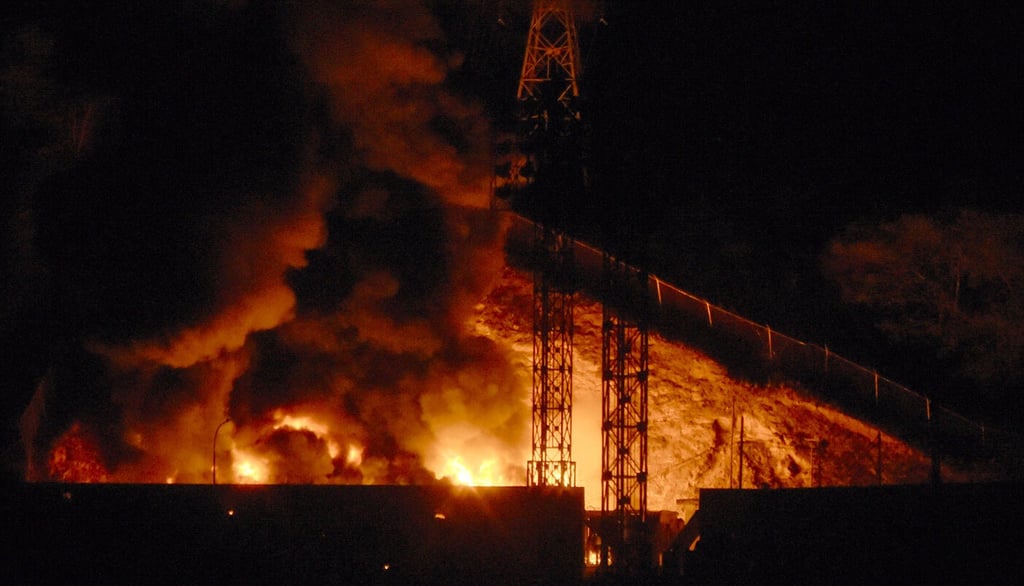
2026 began with a political crisis in Venezuela when the U.S. forces conducted a military operation, which resulted in the capture of Venezuelan President Nicolás Maduro and his wife. Both later appeared in a federal court with accusations of drug trafficking and narco-terrorism. Trump’s statement on “running” Venezuela and further threats against Cuba, Mexico, and Colombia raised urgent questions about international law, stability, and future oil exports in the geopolitical discourse. Officially, the movement is characterized by resistance to drug enforcement. Other opinions involve energy interests, specifically Washington’s seizure of Venezuelan oil tankers and China’s historic ties to Venezuelan oil. Another narrative questions regional stability, referring to Iraq-era interventionism.
The political crisis in Venezuela is the result of continuous economic and governance failures, where Maduro’s legitimacy was questioned. Despite having the world's largest crude oil reserves, the country suffers from low oil production, hyperinflation and continuous sanctions. The state is weak from the domestic security perspective too. The power is fragmented among rivals, such as pro-regime military and criminals. Those who are concerned with the current situation mirroring Iraq also warn that absence of the President, who holds centralized authority, might intensify the violence and worsen the fragmentation. The capture of Maduro itself is controversial. The U.S. claims it to be the act of law enforcement, despite the accusations of the violation of sovereignty and international law from the other world leaders. As of today, the leadership was passed to the Vice-President Delcy Rodríguez whose legitimacy is challenged as a result of abovementioned claims. Recent reports from Caracas show targeted hunting for U.S. citizens and roadblocks in the country. This adds and intensifies the human security dimension. Trump’s further threats on Cuba risk deeper stability issues in the region.
The world is divided into two main narratives: drug enforcement versus oil and strategic interests. The U.S. aims to put an end to drug trafficking and corruption tied to Maduro and “his” criminals, such as Tren de Aragua. Yet some argue that there is not enough evidence nor open data on Venezuela’s influence on U.S. drug flows. These statements question whether such
intervention is justifiable, even under the “narco-trafficking” argument. The other chunk of opinions involve energy and geopolitical interests. Washington's seizure of five Venezuelan tankers and negotiations of oil export deals might imply their initial goal to achieve strategic leverage over crude flows. Moreover, U.S. officials have shared their long-term plans on rebuilding the Venezuelan oil industry under their control and encouraging more investment from U.S. energy companies, yet major ones, such as ExxonMobil, have already stated their hesitation. Thus, the drug's agenda is presented as official and legal, while energy and supply strategies are informally central in today’s discourse.
China is Venezuela’s largest oil partner. Historically, 4.5% of China’s crude imports are supplied by Venezuela through discounted heavy crude. Despite the latter’s crisis, Beijing decided to continue cooperation and legal protections of its investments with Caracas. As part of their continuous rivalry, China openly condemned U.S. actions because this intervention causes disruptions in oil flows, leading to inventory usage or the need for costly diversification.
The oil market reactions have been mixed. Some reported increase in the oil price due to geopolitical risk premiums, whereas others noticed price decreases driven by global oversupply and demand, implying that the intervention caused limited disruption. This is also explained by Venezuela’s oil production constituting less than 1% of global supply, meaning the short-term impact on crude price is not significant.
However, if political transition under the U.S. leadership eases the sanctions and attracts foreign investment, then the country’s oil output will increase substantially. Such global supply increase will cap oil prices upside and shift energy demand patterns. As market expansion and reconstruction contracts are anticipated, investors will price these potential benefits into the energy shares and defense stocks, resulting in their increase. However, as White House already signaled the exclusion of certain major firms, the investors landscape might be restructured for those who are willing to take political risk.
Overall, the U.S. Gulf Coast refiners will benefit from better access to heavy crude supplies. On the other hand, China and Asian refiners need to look for alternative partners, potentially Canada or Middle East, due to increased costs and logistical constraints of Venezuelan oil.
Last but not least, the humanitarian crisis is profound in the region. Since January 3, the civilians experienced violence, displacement, and disrupted public services. This poses concerns for safety and basic needs. The security conditions are deteriorating as the foreign nationals were forced to evacuate, and the reconciliation does not seem to happen soon.
The Venezuelan crisis captures political, economic, legal, and humanitarian aspects. The legal framing exploits drug charges but strategic interests are important to understand the geopolitics and market implications. Energy markets might seem volatile at first and further realignments will determine long-term outcomes. Lastly, regional instability and flashbacks from the Iraq crisis underscore the importance of diplomacy and careful governance.