United States: Redrawing the Map and Reshaping Global Priorities with the 2025 U.S. Security Strategy
With a return to the Monroe Doctrine, sharp criticism of Europe and a diminished role for the Middle East, the December 2025 U.S. National Security Strategy reshaped America’s self-image on the global stage and forced the world to rethink the emerging world order. How will Washington’s priorities shift and what does this new era of U.S. foreign policy hold?
UNITED STATES
Ekaterina Romanenko
12/5/20257 min read
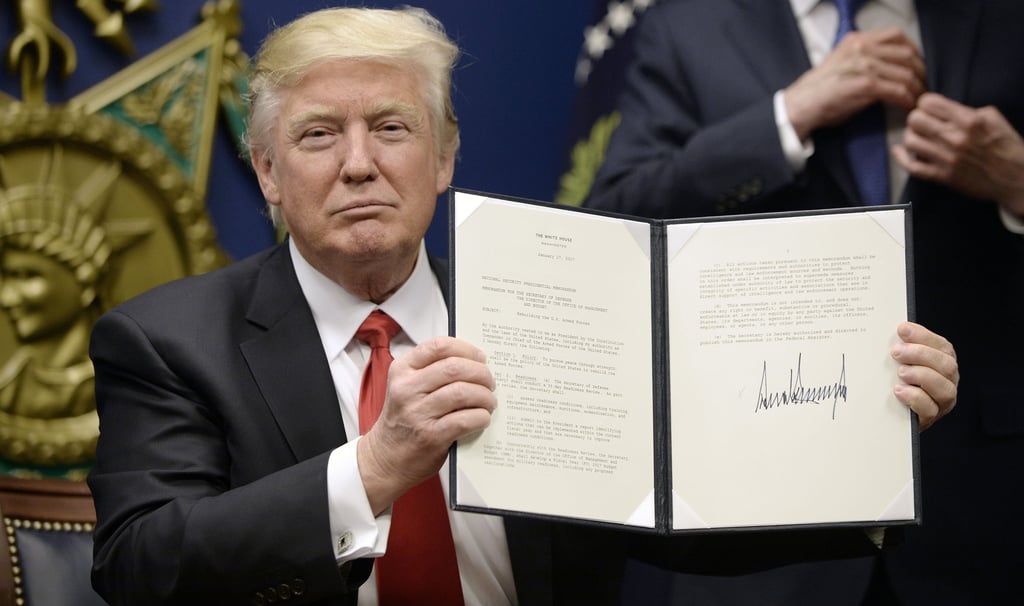
On December 4, 2025, the White House released their updated U.S. National Security Strategy. The document immediately became a major point of reference for markets, governments, and large corporations worldwide. Experts quickly noted that the tone of the new strategy differs significantly not only from the Biden-era version but even from the doctrine articulated during Donald Trump’s first presidency.
The defining feature of this strategy is its refusal to view the international system as a space where the U.S. is a priori obligated to maintain order for the sake of stability itself. For the first time at the level of a foundational strategic document, it explicitly states that the previous approach of simultaneously acting as a security guarantor, an economic donor, and a moral arbiter has proven strategically ineffective and politically and institutionally corrosive.
This leads to the document’s central thesis: U.S. national security can no longer be sustained through the constant external overextension of resources and must instead be subordinated to the country’s internal interests. Thus, the core pillars of the NSS 2025 demonstrate a return to the “America First” principle, focusing on ensuring self-security and economic dominance.
At the heart of the strategy is a redefinition of the very concept of security. It is no longer confined to the military domain or treated as a byproduct of global presence. Instead, security is understood as the combined outcome of internal economic resilience, technological leadership, border control, social cohesion, and the state’s capacity to independently reproduce critical resources. For the first time, the economy is explicitly identified as the foundation of national security. Trade, investment, supply chains, and technological standards are no longer viewed as neutral market mechanisms but are explicitly treated as instruments of strategic competition.
The United States proceeds from the assumption that globalization in its previous form has created dangerous dependencies, particularly in industry, technology, and critical raw materials. The strategy legitimizes state intervention in the economy, industrial policy, the subsidization of “strategic” sectors, and restrictions on competitors’ access to key technologies on national security grounds.
In the geopolitical dimension, the strategy codifies a U.S. retreat from universal global presence. The document introduces a hierarchy of regional priorities, making clear that not all parts of the world are equally vital to American security.
The Western Hemisphere receives particular attention. The White House declares a return to the principles of the Monroe Doctrine, positioning the United States as the region’s leader with the right to intervene in order to ensure stability and security.
“The United States ignored this region for many years, but now it is returning to the Monroe Doctrine and will follow it in order to restore American primacy in the Western Hemisphere, protect our homeland, and secure access to key geographic areas of the region,” the document states.
A central focus in this context is the fight against organized crime: the activities of drug cartels and large criminal gangs are equated with terrorist threats.
According to the document, designating cartels as Foreign Terrorist Organizations (FTOs) expands Washington’s legal authority to disrupt their operations. Analysts note that this decision is intended to create mechanisms for more active involvement in regional security matters, potentially including expanded intelligence cooperation and targeted operations to neutralize threats.
Migration is explicitly reclassified in the strategy from a humanitarian issue into a priority national security challenge. The document emphasizes the need to ensure border integrity and calls for closer coordination with Latin American governments to contain migration flows at distant points of origin.
In East Asia, the central task is defined as countering China’s influence in the region, including limiting its economic presence in Latin America and strengthening allied economies to resist Beijing’s dominance.
The new strategy departs from earlier approaches that emphasized broad, all-encompassing “strategic competition” and instead articulates a specific objective: restoring U.S. economic independence and reorienting trade relations with China toward reciprocity and fairness. The document explicitly identifies China as the key economic and technological competitor whose growing power necessitates adjustments in U.S. policy.
Later sections highlight the strategic importance of the Indo-Pacific region, pledge stronger ties with allies, and call for enhanced defensive capabilities near Taiwan and along the first island chain. In doing so, Washington seeks to build international coalitions to reduce dependence on Chinese supply chains, including initiatives with partners on critical minerals and technologies aimed at limiting Beijing’s dominance in key sectors and strengthening Taiwan’s role.
While Chinese officials have yet to publish a detailed response, experts warn that labeling Beijing as a structural competitor could push both sides to accelerate technological and military programs, increasing the risk of confrontation in and around the Taiwan Strait.
When it comes to regional issues, however, the strategy delivers its most painful blow to Europe. For the first time, the text goes beyond sharp language toward the EU and includes accusations that European capitals have embarked on a path of “self-destruction” and “civilizational erasure.”
Moreover, the strategy openly declares Washington’s intention to “cultivate resistance” to the current trajectory of European development by working directly with individual countries while bypassing Brussels’ supranational structures.
Washington’s primary grievance concerns what it describes as the “unrealistic expectations” of European elites regarding the conflict in Ukraine. The war occupies a significant place in the European section of the U.S. strategy. Washington officially declares that the “key interest of the United States” lies in the swift cessation of hostilities.
An additional destabilizing factor in transatlantic relations is the revision of Washington’s approach toward Moscow. For the first time in 80 years, Russia no longer appears in the document as the principal “strategic adversary.”
Responsibility for “Russia’s aggression against Ukraine” is omitted, while restoring strategic stability in relations with Moscow is listed among the Trump administration’s priorities. Dialogue is already underway on limited cooperation in areas such as strategic arms, the Arctic, and global food security.
This is not the only notable feature of the European section. To ensure long-term regional security, the United States introduces the so-called “Hague Commitment,” requiring NATO members to raise defense spending to 5 percent of GDP. The strategy emphasizes that Europe must provide for its own defense and that NATO should no longer be viewed as a “permanently expanding alliance.”
CSIS experts note that meeting Washington’s financial ultimatum would require the EU to dismantle elements of the welfare state. Redirecting resources toward military spending would inevitably lead to cuts in social programs, posing a serious challenge to political stability in Europe’s largest economies.
According to CFR experts, NSS 2025 transforms Europe from an equal partner into a zone of “active American management,” where access to U.S. power depends on loyalty and financial contribution.
The Middle East and Africa are viewed in the new U.S. National Security Strategy through the lens of cost minimization and great-power competition. For the first time in decades, the Middle East loses its status as a dominant priority. Reduced U.S. energy dependence on the region and fatigue from prolonged conflicts allow Washington to scale back its military and diplomatic burden without fully abandoning its presence.
The document preserves narrow but firm priorities, including Israel’s security, protection of freedom of navigation at key maritime chokepoints, prevention of transnational terrorism, and containment of destabilizing actions by regional state and non-state actors. At the same time, the strategy explicitly moves away from democracy promotion, large-scale interventions, and nation-building. The United States intends to work with existing regimes “as they are” if doing so serves American interests.
The potential impact on the Middle East is twofold. On the one hand, expectations of constant U.S. intervention decline, expanding space for regional autonomy. On the other, the resulting attention vacuum intensifies competition among external actors and heightens the risk of fragmentation, particularly amid unresolved conflicts and weak institutions.
Africa is treated even more pragmatically in the 2025 U.S. strategy. The continent is no longer presented as a space for broad partnerships, institution-building, or value promotion. Instead, attention is focused on economic and strategic interests such as access to critical resources, cobalt, lithium, and rare earth elements, and countering the growing influence of China and other external powers. The United States will engage with African countries selectively, commercially, and with limited long-term commitments, supporting only those projects and partnerships that directly serve U.S. national interests.
Particular attention is paid to the Horn of Africa. Ethiopia, Somalia, Djibouti, and Eritrea are viewed as strategically significant due to their geopolitical location, control of maritime routes, and role in global supply chains. Ethiopia is seen as a key actor for regional stability and influence over the Red Sea, while Somalia and Djibouti are regarded as critical nodes for maritime security and counter-extremism.
Overall, with regard to these two regions, the 2025 strategy establishes a framework of limited engagement. Both remain important to U.S. national security, but primarily as arenas for protecting strategic interests rather than as spaces for transformation or long-term stabilization. This approach reduces financial and military costs and allows Washington to focus on global competition, while simultaneously increasing uncertainty for states with fragile institutions and creating opportunities for alternative external actors to expand their influence.
Running throughout the document is the theme of the economy, now inseparably linked to national security. The strategy proclaims a course toward comprehensive reindustrialization and energy dominance.
The United States intends to become an “energy fortress,” leveraging its resources, oil, gas, and nuclear power, as tools of competitive advantage and as a means of lowering costs for domestic industry. For global business, this signals the onset of an era of protectionism: Washington will aggressively reduce trade deficits and reshore production chains. The concept of “free trade” gives way to demands for “fair and reciprocal” trade. This means that access to the U.S. market will increasingly become a privilege earned through loyalty and investment in the American economy. The strategy explicitly warns that the era in which allies could grow at the expense of the American consumer has come to an end.
For business owners and investors, NSS 2025 presents a world in which political risk becomes decisive. Global supply chains will be reshaped under pressure from tariffs and security requirements. Europe is likely to face economic strain as it loses the American “umbrella” and is forced to redirect resources toward defense. At the same time, the U.S. focus on domestic investment in high technology, AI, biotechnology, quantum computing, and energy, creates new opportunities within the United States itself.
The document leaves little doubt: Washington is no longer playing globalization by the old rules. The United States is moving toward a hard-edged defense of its interests, and the rest of the world will have to adapt to a reality in which every country stands increasingly on its own, and “America First.”
Ekaterina Romanenko is a Lead Analyst at Autran Group, and specialises in affairs relating to Energy, Global Supply Chains and the Middle East. She has been with Autran Group since 2023.
She can be reached at eromanenko@autrangroup.com.