Russia: Long‑Term Energy Deals Anchor Moscow’s Pivot to the Global South
The recent Putin-Modi summit in New Delhi underscored the enduring complexity of a partnership navigating shifting alliances, economic pressures, and regional rivalries. Will Russia and India cement a truly strategic partnership for the new century, or drift toward a pragmatic, transactional alignment dictated by circumstance?
INDIARUSSIA
Ermek Esenkanov
12/28/20254 min read
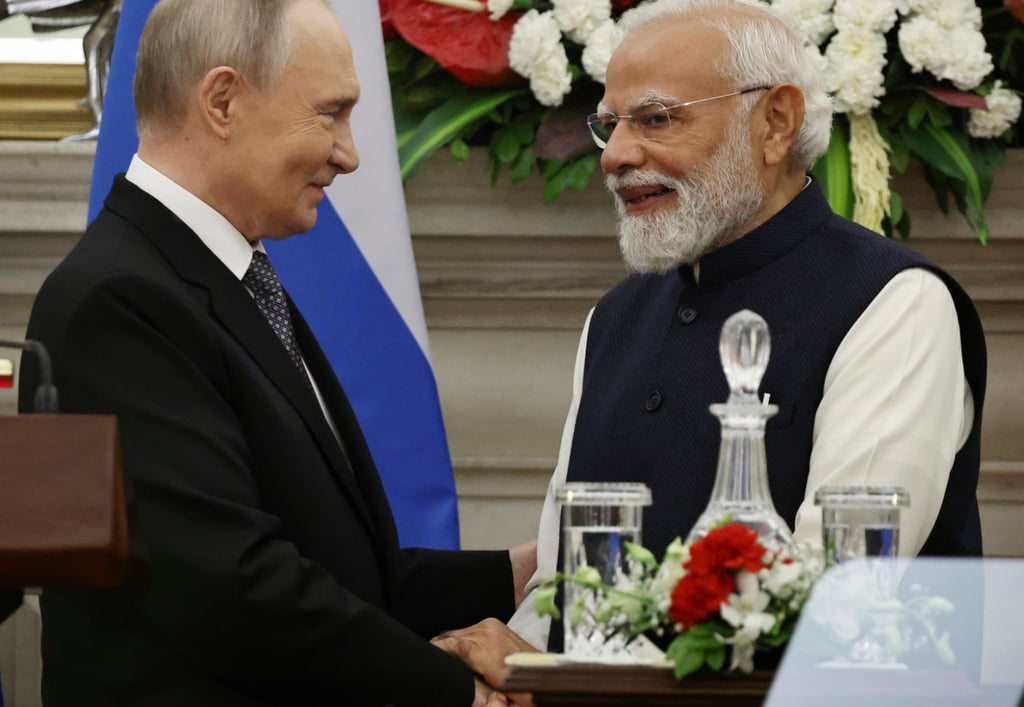
The recent summit between President Vladimir Putin and Prime Minister Narendra Modi in New Delhi has been identified as a pivotal event in the development of Russia-India relations, demonstrating the durability of the long-established strategic relationship between these two countries and their ability to navigate the rapidly changing global environment. This meeting was the first time the two leaders have met face-to-face in several years. It occurred against the backdrop of significant changes in the relationship between Russia and India and the international system. Moscow is experiencing an increasing level of sanctions imposed by the Western governments, which has led to Moscow’s increased reliance on China. Simultaneously, India is becoming more integrated with the United States through increasing levels of cooperation through QUAD, defense procurement, and the formation of economic partnerships with the U.S. The outcome of the summit indicated a continued alignment between the two countries and that they will be able to develop a relationship that would allow both to react to the changing political landscape globally.
The central theme of the summit was the strengthening of a cooperative relationship in the areas of defense and security. India continues to be one of the largest importers of Russian military technology despite Western countries attempting to reduce India's reliance on Russia by promoting diversification of Indian defense suppliers. During the summit, the two countries again confirmed their commitment to working together to co-develop advanced weapon systems; expanding the "Make in India" initiative; and accelerating the achievements of joint initiatives in the areas of Air Defence Systems, Hypersonic Systems, and Naval Modernisation. In addition, there was a heightened focus and commitment from both countries on the continuation and enhancement of the S-400 missile system, discussions regarding next-generation Armoured Vehicles, and increased collaboration with one another on developing Space-Based Military Assets.
Energy cooperation has become an increasingly important aspect of the bilateral relationship. Russia has emerged as a significant supplier of discounted crude oil to India since 2022, which has changed the way energy is shipped internationally and has provided New Delhi with greater leverage within global energy markets. At their recent summit, Moscow provided long-term pricing guarantees for crude oil and liquefied natural gas, support for participation in new Arctic energy development projects and a greater role for Indian companies in upstream developments in Russia. India, for its part, stressed the importance of a stable delivery route and a settlement mechanism that will not be affected by Western sanctions.
However, there are signs of increasing strategic uncertainty underneath this veneer of stability. Russia is becoming increasingly aligned with China, and China is now Moscow's principal economic and political ally, concerning New Delhi. India sees the Russia-China relationship as a source of potential constraints on Moscow's ability to remain neutral with respect to Indo-Pacific issues, especially with respect to the continuing tensions along the India-China border. Russia's unwillingness to articulate a clear position with regard to Indo-Pacific security frameworks, such as QUAD and AUKUS, has also contributed to a growing sense of frustration on the part of Indian officials.
Another issue of great importance to Russia is its growing re-engagement with Pakistan. As Russia has stated that the primary areas of cooperation with Pakistan will be counter-terrorism, energy and limited industrial cooperation, any signs of improved relations will create an uncertainty in the Indian government's view on Russia's future strategic objectives in Asia vis-a-vis Pakistan. While Russian officials have consistently stated that their "privileged strategic partnership" with India is not negotiable, Indian officials are concerned that increased cooperation between Russia and Pakistan represents a change in Russia's regional strategy.
The other component of the summit was focused on the issue of sanctions and financial sovereignty. India perceives that there is increased risk for secondary sanctions, most particularly in banking, insurance and high-tech imports. These are reasons for both India and Russia to increase the pace of discussions regarding an independent financial system; such as using the rupee and the ruble in bilateral trade, expanding the Russian SPFS system and creating alternate payment corridors via INSTC. If realized at scale, these initiatives could fundamentally transform regional logistics and provide India unprecedented access to Central Asia, the Caucasus and the Middle East.
Indian analysts claim that Russia's value is not only based upon trade and defense. Russia is an important ally for India and continues to hold value as a strategic balancer giving India the opportunity to negotiate with other superpowers while developing diplomatic ties. Russia has continued to demonstrate India's geoeconomic vision through the relationships Russia maintains with Central Asia, Iran and other regional and international organizations such as (BRICS) and Shanghai Cooperation Organization (SCO). Russia believes that India holds value to them as the second largest consumer market, a political ally and counterbalance to their dependency on China and as a springboard to gaining a foothold in the Global South.
However, because of the current changes to traditional alliances, neither country's outlook about their continued partnership is clear. New Delhi desires to maintain its autonomy, develop economic partnerships that extend beyond individual countries and avoid being boxed into one super bloc. Moscow continues to develop its presence in non-Western structures while maintaining relations with its historic partners. Each side understands that their bilateral interests may not always align, particularly regarding China, the Indo-Pacific region and the global economy; and both recognize that their continued multipolar orientation supports their long-term mutual interests.
While both the Kremlin and South Block have yet to announce how they will proceed with this partnership moving forward. Will this relationship between Russia and India ultimately be more transactional or will it continue to develop past that point much like the alliances we witnessed during the Cold War? A recent summit between Putin and Modi showed that these two countries want to continue strengthening their strategic alignment. However, it is clear that there will be challenges and complexity surrounding the evolving nature of this partnership because of the multiple competing pressures and geopolitical changes that exist within their respective regions.
This summit was not simply another example of diplomatic posturing; rather, it sent a clear message to the rest of the world about the viability of Russia and India being strategically aligned for many years. Despite both observing the expansion of competing alliances and shifting geopolitical climates that they are currently facing, both nations still regard each other as critical modulating partners. Therefore, it will be important to see how these two nations resolve any conflicting issues going forward and navigate continuing changes as they represent the early stages of continued partnership development through ceremony or actions during times of turbulence.