Greenland: Strategic and Economic Implications of American Ambitions
Greenland, long seen as a remote outpost, is now at the center of Washington’s ambitions. Trump has declared that the United States will take control of the island “one way or another”, calling it vital for American national security. What does Trump want from Greenland, how far is he willing to go, and what could be the economic and strategic consequences for the U.S. and global markets?
DENMARKUNITED STATES
Ekaterina Romanenko
1/12/20269 min read
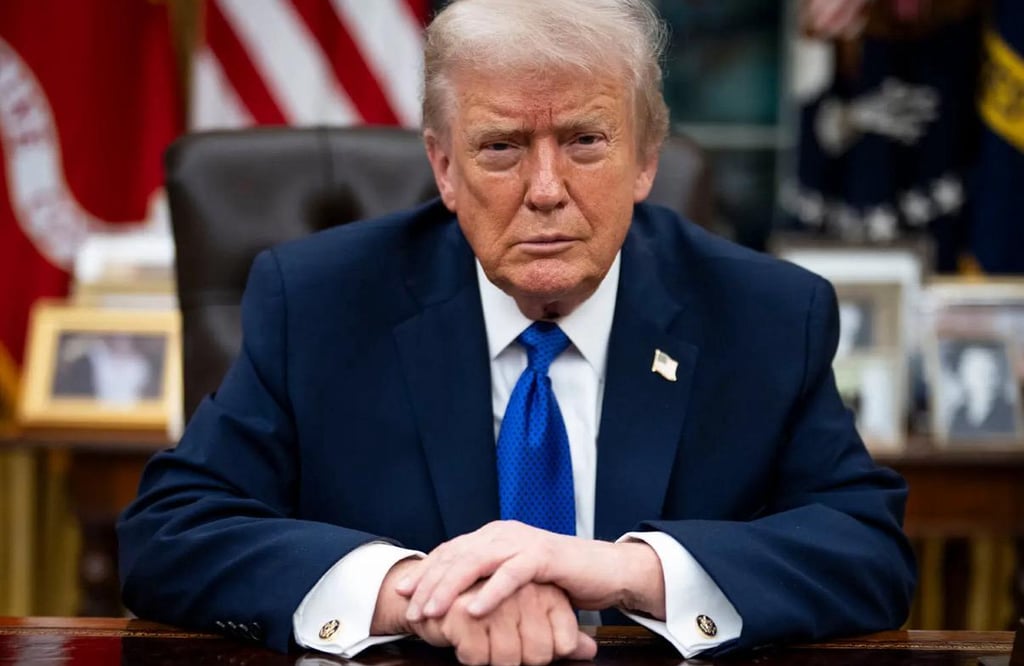
Since early January 2026, Greenland has ceased to be a peripheral issue in U.S. foreign policy and has instead become one of the key drivers of transatlantic tension. Donald Trump has returned the idea of establishing American control over the island to the public agenda, an island that formally remains part of the Kingdom of Denmark with broad autonomous status. In interviews with The New York Times and during subsequent White House briefings, he stated bluntly that the United States would “take Greenland one way or another,” linking the issue directly to the national security of the U.S. and the West as a whole. According to Trump, if Washington fails to secure control over the island, Russia or China will exploit the situation, an outcome he described as unacceptable for American interests.
These statements were reinforced and expanded upon in official comments by White House Press Secretary Karoline Leavitt, who emphasized the need for “greater U.S. control over the Arctic” in response to the growing activity of Moscow and Beijing in the region.
The culmination of this political shift came on January 12, 2026, when the discussion of Greenland definitively moved from the realm of hypothesis into the format of a concrete legislative initiative. Congressman Randy Fine introduced the Greenland Annexation and Statehood Act in the U.S. Congress, a bill granting the president authority to pursue any measures necessary to acquire the island and obliging relevant agencies to develop a roadmap for Greenland’s integration as the 51st U.S. state.
The text of the initiative has been published in the Congressional Register and referred to the committees on foreign affairs and armed services. Against this backdrop, Trump’s rhetoric has grown maximally hardline. He stated outright that leasing arrangements or temporary agreements provide neither strategic certainty nor operational freedom, and that the United States requires full ownership, comparable to the territorial acquisitions of the nineteenth century. This raises an obvious question: why does Trump need Greenland as yet another American state?
Several factors are at play. First, resources. According to current assessments by the U.S. Department of Energy and the U.S. Geological Survey, Greenland contains deposits of more than 50 of the 60 minerals classified by Washington in 2026 as critical for defense production, the energy transition, and high-tech manufacturing. Particular attention from the Trump administration is focused on the Kvanefjeld deposit in southern Greenland, developed by Energy Transition Minerals. Corporate and industry estimates suggest the site could supply up to 20 percent of global demand for neodymium and praseodymium, key elements for electric motors and weapons guidance systems. Even larger in scale is Critical Metals Corp’s Tanbreez project, whose resources are estimated at 4.7 billion metric tons of ore with high concentrations of heavy rare earth elements. For Washington, control over these assets would mean a strategic weakening of China’s supply chains amid an ongoing trade confrontation with Beijing.
Energy considerations rank second in the administration’s calculations. Updated USGS data indicate that the Arctic shelf around Greenland contains approximately 17.5 billion barrels of oil and 148 trillion cubic feet of natural gas. Potential control over these resources via the state-owned company Nunaoil, with the involvement of American majors including ExxonMobil, would allow the United States to strengthen its position in the North Atlantic and exert additional pressure on Russian Arctic energy projects.
Third, transportation plays a critical role. Greenland’s importance in this sphere is linked to the development of the Northwest Passage, which, amid melting ice, is becoming a viable alternative to routes through the Suez Canal. Control over the ports of Nuuk and Kangerlussuaq, according to U.S. logistics companies, could reduce shipping times between the U.S. East Coast and Asia by 15 to 20 percent.
The European Union responded predictably to Trump’s territorial claims with heightened diplomatic alarm, stating that encroachment on Danish sovereignty undermines the foundations of international law and calls into question NATO’s viability as an alliance. Consultations have already begun in Brussels on possible countermeasures, including retaliatory tariffs on U.S. goods should pressure on Copenhagen continue.
Economic tensions have already been reflected in the markets. The Danish krone has shown increased volatility, while insurance costs for vessels operating in the Greenland Sea have risen by approximately 15 percent. The Danish government also announced the allocation of an additional 50 billion Danish kroner, around $7 billion, to strengthen the island’s defense infrastructure, including the deployment of radar stations and the purchase of F-35 fighter jets.
A separate source of concern for the EU is the potential loss of access to Greenland’s fishing resources. Seafood accounts for more than 90 percent of the island’s exports, and existing agreements grant French, German, and Spanish vessels access to quotas for halibut and cod. Any change in jurisdiction would put these arrangements at risk and create additional pressure on Europe’s fishing sector.
Nevertheless, despite Trump’s hardline rhetoric and the introduction of the “annexation bill,” most security analysts agree that a direct U.S. military invasion remains unlikely. Such a move would destroy Washington’s legitimacy as a guarantor of collective security and provide Russia and China with justification for sharply expanding their Arctic presence.
A more realistic scenario is a coercive economic and political deal. The historical parallels frequently cited by Trump are well known. The Louisiana Purchase from France in 1803 and the acquisition of Alaska from the Russian Empire in 1867 both occurred during periods of geopolitical uncertainty and ultimately strengthened U.S. power dramatically.
In 2026, the White House is offering Greenland’s residents an investment package of up to $10 billion for infrastructure development, far exceeding Denmark’s annual block grant of roughly $600 million.
The financial parameters of a potential Greenland purchase are already being actively discussed among experts and within Congress’s budget committee. Estimates of the island’s price range from $12.5 billion to $77 billion, depending on the compensation model, infrastructure commitments, and social payments involved. Within the White House, these sums are viewed as an acceptable price for long-term sovereignty and control over strategic assets. Should Trump’s plan be implemented, the consequences would be far-reaching.
Integrating Greenland as the 51st state would not merely expand U.S. borders but fundamentally restructure the American domestic economy, turning the island into a foundational resource hub. The shift from Danish to U.S. jurisdiction would immediately increase the profitability of extraction projects by lowering the corporate tax rate from 25 percent to the federal level of 21 percent, while the application of Qualified Opportunity Zone regimes would effectively eliminate capital gains taxes on long-term infrastructure investments.
A decisive factor for businesses would also be the introduction of the U.S. “percentage depletion” system, allowing companies such as Critical Metals Corp to deduct up to 22 percent of gross revenue from taxable income. Moreover, statehood would classify extracted resources as “domestic production,” eliminating import duties and administrative barriers and reducing the final cost of rare earth metals for U.S. industry by 10 to 15 percent.
This process would trigger a powerful chain reaction across the United States, redistributing capital flows between regions. The Rust Belt (Michigan, Ohio, Pennsylvania) would gain direct, geopolitically insulated access to lithium and neodymium, enabling Detroit to dramatically reduce electric vehicle production costs and reclaim technological leadership in competition with China. At the same time, East Coast states from New York to Virginia would become the primary beneficiaries of Northwest Passage development: the deep-water ports of Nuuk and Kangerlussuaq would become “internal” transit hubs, channeling Arctic cargo directly into American harbors while bypassing international regulators.
Although Alaska may face temporary competition for federal subsidies, in the long term the formation of a powerful Greenland-Alaska tandem would allow the United States to monopolize the Arctic’s energy and mineral markets, providing California’s tech giants and Texas’s defense industries with unprecedented price dumping on critical raw materials.
For Greenland itself, the transition to U.S. jurisdiction in 2026 would mark the final dismantling of the “social dependency” model and a shift toward aggressive economic growth. The loss of Denmark’s annual block grant of 3.9 billion kroner would be offset by an unprecedented influx of American capital: budget committee estimates suggest that in the first five years alone, investments in deep-water ports, airfields, and the island’s energy grid would total between $10 and $15 billion. This “infrastructure march” would transform Greenland from a subsidized autonomy into a wealthy industrial foothold, where GDP per capita could double and approach Alaska’s levels.
The downside of this prosperity, however, would be a harsh conflict between Nuuk’s traditional way of life and Washington’s industrial pragmatism. The removal of EU environmental constraints would enable large-scale open-pit mining of uranium and rare earth elements, inevitably transforming the island’s unique ecosystem and forcing the indigenous population to choose between preserving national identity and full integration into the American socio-economic system.
The island’s demographic map would also be radically redrawn. The implementation of megaprojects in southern Greenland would require tens of thousands of skilled workers from the United States, potentially doubling the population within a decade and turning the Inuit into an ethnic minority on their own land.
In transport and logistics, Greenland would cease to be an “Arctic dead end” and become a key hub of the Northwest Passage, with control over fishing resources and navigation fees fully reoriented from the European to the American market. For the local government in Nuuk (Naalakkersuisut), this transformation would amount to a “golden cage”: liberation from budgetary dependence on Copenhagen would come at the cost of diplomatic subjectivity, turning the island into a vast, closed zone of Pentagon and U.S. mining corporate influence, permanently reshaping the North Atlantic.
For Europe, the realization of Donald Trump’s “Greenland case” would not merely be a diplomatic incident but the largest economic shock since the energy crisis of the 1970s. The loss of direct access to Greenland’s rare earth deposits would effectively nullify Brussels’s ambitions under the European Green Deal, as European automakers and energy companies such as Volkswagen and Siemens would become fully dependent on U.S. raw material quotas. This would place the EU in a position of “double hostage-taking,” caught between dominant China and aggressive U.S. protectionism.
The collapse of long-standing fishing agreements that provided up to 25 percent of cod and halibut catches for French, Spanish, and German fleets would trigger a deep crisis in the food sector and drive up seafood prices within the Union, forcing Brussels into a trade war with Washington amid an already fragile economy.
Moreover, Greenland’s transformation into the 51st U.S. state would deliver a crushing blow to Northern Europe’s financial stability. Denmark, stripped of control over 98 percent of its territory, would face the need for a radical restructuring of its state budget and debt obligations.
The geopolitical shift of gravity in the Arctic would compel the EU to accelerate the creation of its own defense structures outside NATO, as Greenland’s conversion into an exclusive U.S. military outpost would deprive European states of any voice in North Atlantic security matters.
For Russia and China, U.S. annexation of Greenland would mark the Arctic’s transition from a zone of international cooperation to one of direct strategic containment. Moscow views full U.S. control over the Greenland-Iceland-UK (GIUK) gap as a critical threat to its Northern Fleet: turning Greenland into an “unsinkable aircraft carrier” would allow Washington to lock the Russian fleet inside the Barents Sea, cutting off access to the Atlantic.
For China, the loss of Greenland as a potential partner would represent a strategic defeat for its “Polar Silk Road” concept. Years of Beijing’s efforts to establish a foothold on the island through investments in airports and mining projects, including rare earth initiatives blocked by the United States, would now be definitively nullified by American sovereignty. In response, on January 12, 2026, China’s Foreign Ministry declared unacceptable the use of “third countries as a pretext” for U.S. expansion.
This move is expected to push China into an even closer alliance with Russia. Unable to invest in Greenland, Beijing may redirect billions of dollars into the development of Russia’s Arctic infrastructure and icebreaker fleet. Thus, Trump’s “appropriation” of Greenland would not eliminate the “Chinese threat” but merely push it eastward, creating a powerful Russian-Chinese bloc in the Arctic ready to challenge American dominance.
In this way, Trump’s “Greenland case” in 2026 extends far beyond a simple territorial dispute. It represents a deliberate strike against the foundations of the transatlantic partnership, undertaken in pursuit of unilateral U.S. strategic advantage. On the one hand, this strategy promises Washington unprecedented gains: sovereign access to critical resources, total control over key Arctic routes, and long-term strategic superiority over geopolitical rivals. On the other, its implementation carries fundamental costs, including a deep crisis within NATO, the irreversible erosion of trust among European allies, and the provocation of a hardened anti-American Russia-China bloc in the Arctic.
Ultimately, the fate of this project will determine not only the map of the Arctic but the future character of the world order itself: whether it becomes unipolar under U.S. dominance at the cost of breaking with old allies, or gives rise to a new, even harsher and more fragmented multipolarity in which confrontation prevails over cooperation. The final outcome will depend not only on the will of the White House but also on the ability of the international community to offer a viable alternative to a force-driven redistribution of spheres of influence.