Germany: A Turning Point in Post-Cold War Security Policy
More than three decades after the Cold War’s end, Germany stands at a strategic crossroads, redefining its place within Europe’s shifting security landscape. Will this renewed pursuit of military strength mark the emergence of a confident European defender, or the reawakening of old anxieties about German power and ambition?
GERMANY
Ermek Esenkanov
12/18/20256 min read
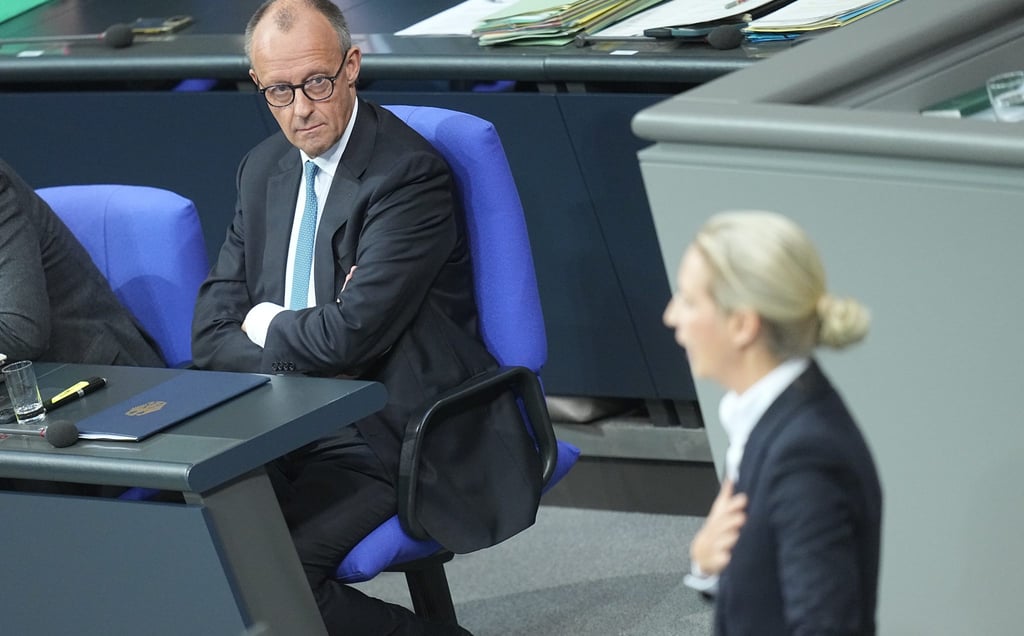
The current security policy changes in Germany may be the largest changes to occur since the Cold War ended. These changes have resulted from the creation of an armaments program and the subsequent increases in the number of troops, which have combined to create a large shift in the way that Germany has historically viewed itself as a limited and restrained military force, and in the way it wants to view itself within Europe as a whole with regard to security.
While Germany has always been known as Europe’s "engine of the economy" for some time, it has largely acted in a very passive manner when it comes to leveraging that same economic position to develop military strength. Now, however, Germany is placing itself at the forefront of being an essential element of continental defense.
The changes taking place in Germany's security policy are not simply a matter of ambition but rather are the result of structural changes taking place in Europe's security environment. The current crisis in Ukraine, the continuing decline of arms control treaties and the potential for high-intensity military conflict between countries are forcing Germany to rethink its previous complacent attitude towards its own security vulnerabilities. In addition, Germany is redefining not only its defence posture but also the NATO and EU balance of responsibility.
For the majority of the post-World War II era, Germany's views of Security were greatly influenced by historical memory and political caution. As military force was viewed as a method of last resort, diplomacy, economic Integration and multilateralism formed the backbone of Germany's foreign Policy. Although this approach provided security and stability in an otherwise predictable world order, excessive under-investment in the Bundeswehr led to many structural features of under-resourced armed forces.
The Russian invasion of Ukraine has shattered the belief that large-scale conventional conflict is a thing of the past; the reality that deterrence without credible military capability is inherently vulnerable to failure, and that Europe's security cannot rest indefinitely on the assumptions of external guarantees, has resulted in a strategic perception shift for German policymakers. The conflict has illustrated that the Bundeswehr is lacking in both the depth and sustainability required to undertake prolonged operations or respond quickly to crises.
The central tenet of Germany's new strategy for defence is the expansion and stabilisation of its military personnel base and to mitigate the failings of recruiting and retaining personnel to enable the Bundeswehr to fulfil its operational commitments, which has been limited for many years. Demographic trends of a 'graying' population, combined with the demand for workers in the civilian labour market and a lack of attractive military service (pay, benefits, working conditions) have been the primary cause of this effect on personnel readiness.
In order to reverse these negative trends, Berlin has committed to additional funding in the areas of recruiting, training, and overall standard of living for military personnel. Through the provision of improved housing and expanded education opportunities, as well as providing clearer career progression through military service, the aim is to provide a viable long-term career option, rather than a short-term commitment. The focus on the quality and morale of the personnel within the forces is also reflective of an evolving recognition that modern military power and capability is equally based on, and dependent on, the quality and morale of personnel as it is on technology.
In conjunction with the expansion of its manpower, Germany is currently executing a broad-based modernisation of its military capabilities. Upgrades to its armored and mechanised forces, procurement of current back-up fighter aircraft, and optimisation of its navy's capability through advanced surface vessels and submarines are all part of this endeavour. National air and missile defence systems are also being strengthened with more advanced equipment; the increase of long-range strike capabilities has contributed to this increasing concern about proliferation of missile systemsworldwide.
In addition to upgrading its current capabilities, Germany is investing heavily in new areas of warfare. The areas of cyber defense, space-based assets, unmanned systems, and secure digital communications have all become an integral part of defence strategy. Recent armed conflicts have shown that a nation with access to superior information, intelligence fusion capability, and an effective command & control network will ultimately prevail on the battlefield, even prior to deploying kinetic forces. Therefore, Germany's modernisation programme is designed to build a modernised structure that integrates multiple capabilities and is capable of conducting operations in a network-centric manner and across multiple domains simultaneously.
To continue with this transition, a weapon financing overhaul is important. Germany's recommitment to the NATO standard of 2% of GDP is not only symbolic, but also indicates that Germany cannot rebuild their military strength through an infusion of funds in a single year. As such, it is also important that Germany ensures that the funds are invested in a sustainable manner that allows for continued military readiness and to be equipped, and to develop logistical and command structures that can be deployed.
For NATO, Germany's reinvestment signifies a strategic development. As Europe's most populous economy, Germany's stronger defence investment is an important enhancement of NATO's legitimacy, especially concerning the NATO eastern flank. Germany's increased defence investment also indicates the end of the long-standing criticism regarding unequal burden-sharing among NATO members.
One of the important aspects Germany will be focusing on for the transformation of its military is developing an industrial and technological resiliency. The German government plans to foster a revival of the German domestic defense industry, create greater capacity to produce ammunition, and eliminate dependency on foreign suppliers for munitions. At the same time, Germany is working towards increasing the depth of collaboration with European defense manufacturers and investing at an accelerating rate in new technologies such as artificial intelligence, autonomous systems/platforms, and secure communications.
This shift in Germany’s military strategy aligns with broader European ambitions to strengthen strategic autonomy, particularly in the area of defence. While the transatlantic security framework remains essential, Berlin increasingly recognises that Europe must be able to conduct military operations independently in scenarios where external support is delayed, limited, or politically constrained. Germany’s approach therefore seeks to reinforce Europe’s collective military capabilities while simultaneously preserving and strengthening its partnership with the United States.
Many critics point out that the additional military investments could take funds away from social welfare, education, and climate policy which have been deeply rooted in the German political landscape. There are, however, many warning signs that have become apparent through history that show Germany's increased military presence and what the consequences of that may look like.
The German government has attempted to mitigate these fears by developing a narrative surrounding the reforms that build upon the concept that they are defensive military investments that exist to maintain an environment of peace and to support their allies, not to promote or project military power.
In addition, the government has put an emphasis on being transparent, allowing for parliamentary oversight, and acting within international law, in an attempt to assure both domestic and international audiences that Germany's rearmament is not intended as an independent act, but instead, is complementary to existing multilateral systems.
Although these measures have received broad support, international reactions have also included a degree of caution. Germany’s expanding military capabilities are widely seen as strengthening collective deterrence, particularly for allies in Central and Eastern Europe. At the same time, some European leaders have expressed concern that a rapid military build-up could be interpreted as escalatory, especially in the context of relations with Russia. To address these concerns, Berlin continues to emphasise close coordination with partners and a commitment to acting within multilateral frameworks rather than pursuing unilateral initiatives.
Germany developing its military capabilities also represents a major shift in the structure of the security environment in Europe. In addition to investing in people, technology and industrial base, Germany is transitioning from a period of strategic restraint towards being more strategically responsible. This change will allow Germany to be a major contributor to the creation and future discussions on how best to achieve the European defence integration, the distribution of the burden across NATO and the role of the EU in security initiatives.
In the long run, the changes caused by this decision will affect Germany’s neighboring countries and create a spillover of defense policy adjustments in many other European countries. The European defense industry will also enjoy greater demand for the products they produce and greater collaboration with one another due to the increased overall volume of defense spending in Europe resulting from Germany's decision to invest in its own defense. Ultimately, the success of Germany’s rearmament program will hinge upon the ability of Germany’s government to demonstrate continued political will and effectively execute the rearmament plan. In the context of reviving global geopolitical rivalry, Germany is emerging as more than a reluctant military actor to become a primary contributor to Europe’s collective security.